
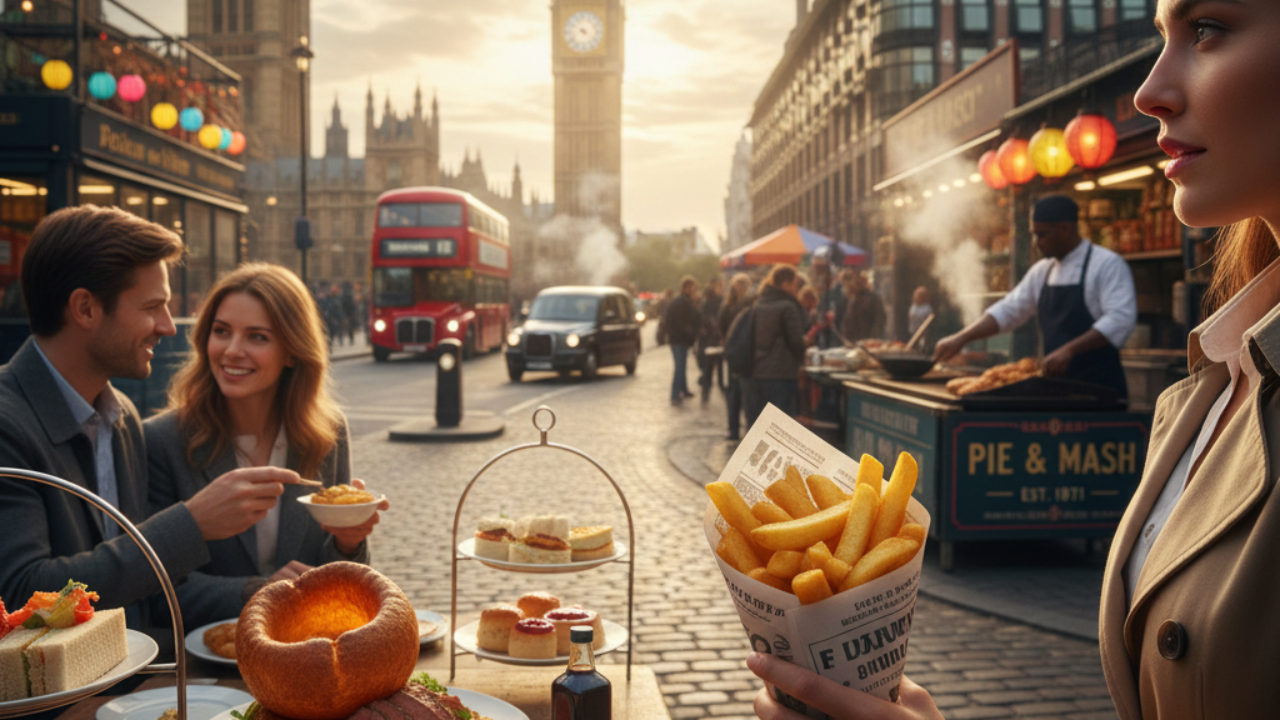
London is known for its landmarks. You see red buses weaving through traffic, black cabs near Big Ben, and grey, rainy skies over the Thames. But beneath the historic facade lies a vibrant, sensory explosion that tells a different story of the city.
London’s food scene shows its diverse population. You can hear forks and knives in Michelin-starred restaurants and the sizzle of street food stalls under railway arches. It’s a place where centuries-old traditions coexist with cutting-edge fusion concepts. If you’re a local rediscovering your city or a visitor ready to explore, this guide shows must-try dishes and spots in London’s food scene.
Historically, British food suffered from a gloomy reputation. Critics often dismissed it as bland or boiled. However, over the last two decades, London has undergone a culinary renaissance. The city has embraced its role as a global melting pot. It absorbs influences from the Caribbean, India, the Middle East, and Europe. Today, London’s food scene is a vibrant mix. You can find top Indian cuisine just streets away from a traditional pie shop. This culinary journey is more than just food. It’s about exploring the rich history and diverse culture of the capital.
You cannot visit England without sampling fish and chips. It is the undisputed national dish. For the authentic experience, skip the fancy restaurants and find a local “chippy.” You want a big piece of battered white fish, usually cod or haddock. It’s fried until golden and crispy. It comes with thick-cut chips on the side. Don’t forget the mushy peas and a splash of malt vinegar. Poppies in Spitalfields gives you a true taste of the 1950s. It serves sustainably sourced seafood that brings comfort food to life.
The Sunday roast is more than a meal; it’s a weekly institution that brings friends and families together. A proper roast includes roasted meat—beef, lamb, pork, or chicken. It’s served with roast potatoes, seasonal vegetables, and the star of the meal: a Yorkshire pudding. This savory, puffy batter pudding is the perfect vessel for rich gravy. Most British pubs serve roasts on Sundays. However, places like The Harwood Arms and Blacklock take this tradition to the next level. They offer high-quality cuts and perfectly roasted sides.
If the Sunday roast is about comfort, afternoon tea is about indulgence and ritual. This tradition started in the 1840s. It includes finger sandwiches, scones with clotted cream and jam, and delicate pastries. All of this is enjoyed with loose-leaf tea. For sheer opulence, The Ritz or The Wolseley offer breathtaking settings. However, for a quirky twist, you might try the science-themed tea at The Ampersand or a fashion-forward experience at The Berkeley. It’s a slice of British aristocracy that everyone should try once.
Before burgers and burritos took over, pie and mash were the original fast food in London. This dish has roots in East London’s working-class history. It includes a minced beef pie, mashed potatoes, and a green parsley sauce called “liquor.” This meal is hearty yet simple, showing off the city’s Victorian history. Goddards of Greenwich is one of the last traditional pie and mash shops where you can enjoy this classic dish as it was originally served.
Also called a “fry-up,” this classic meal cures hangovers and boosts energy for sightseeing. A typical plate is loaded with sausages, bacon, eggs, baked beans, mushrooms, grilled tomatoes, and toast.. Many versions also include black pudding or hash browns. It’s heavy, satisfying, and unapologetically British. Visit a “greasy spoon” café for the real experience, or enjoy an upscale breakfast at The Wolseley with silver service style.
British pub culture isn’t just about the pints; it’s about the snacks that accompany them. The Scotch egg is a hard-boiled egg wrapped in sausage meat. It’s coated in breadcrumbs and deep-fried. This makes it a tasty, portable snack. Originally a luxury item from Fortnum & Mason, it’s now a pub staple. Similarly, the sausage roll, savory puff pastry filled with seasoned sausage meat, is ubiquitous. For a new twist on classics, the Ginger Pig at Borough Market offers sausage rolls that locals love.
London’s love affair with Indian food is profound. In fact, Chicken Tikka Masala is often cited as one of Britain’s favorite dishes.Brick Lane in East London is famous for its curry houses. They serve a wide range of dishes, from fiery vindaloos to creamy kormas. For a modern twist, Dishoom honours the Irani cafés of Bombay. Its menu draws long queues. The bacon naan roll is a fusion masterpiece, blending British and Indian breakfast traditions.
Middle Eastern food is gaining popularity in London, thanks to chefs like Yotam Ottolenghi. His delis serve bright salads, roasted veggies, and pastries that look and taste great. Restaurants like Honey & Co. The Palomar serves dishes with tahini, pomegranate, and za’atar. This highlights the rich flavours of the Levant. It’s fresh, sharing-style food that contrasts nicely with heavier British staples.
London’s proximity to the continent means high-quality French and Italian food is abundant. From the rustic Italian plates at The River Café to the classic French bistro vibes of Maison François, the options are endless. Simultaneously, the city’s Asian food scene is thriving. Chinatown has amazing dim sum. Roti King, on the other hand, serves Malaysian Roti Canai that rivals what you’d find in Kuala Lumpur.
If you only visit one market, make it Borough Market. Located near London Bridge, it is the oldest and most renowned food market in the city. Here, you can sample artisanal cheeses, fresh oysters, and cured meats. The aroma of sizzling chorizo and fresh bread fills the air. It’s a sensory overload in the best way possible. Be sure to grab a doughnut from Bread Ahead—their vanilla custard and honeycomb fillings are legendary.
Borough Market is the best, but other spots are also thrilling. Camden Market offers a vibrant mix of street food from around the world. You can find halloumi fries and Venezuelan arepas there. Maltby Street Market, hidden under railway arches in Bermondsey, has a more intimate vibe. It features high-quality vendors like St. John Bakery. These markets are where culinary trends start. Passionate vendors show off the best of London’s grassroots food scene.
London moves fast, and sometimes you need food that can keep up. The Cornish pasty is a tasty pastry filled with beef and vegetables. It makes a great handheld meal. If you love sweets, try Crosstown Doughnuts. They have sourdough doughnuts in unique flavours like matcha tea and sea salt caramel banana cream. Also, if you see a Beigel Bake on Brick Lane, get in line for a salt beef bagel with mustard and pickles. It’s a 24/7 institution.
Modern British cuisine has moved far beyond the “meat and two veg” stereotype. Chefs like Fergus Henderson from St. John made “nose-to-tail” eating popular. This philosophy celebrates off-cuts and seasonal ingredients. This movement has trickled down, influencing gastropubs and bistros across the city. Menus now highlight where food comes from. They celebrate local produce like British asparagus, Scottish scallops, and Welsh lamb.
For those seeking luxury, London boasts an impressive array of Michelin-starred restaurants. Gordon Ramsay’s main restaurant in Chelsea has kept three stars for over 20 years. It serves outstanding French-inspired food. Meanwhile, The Ledbury in Notting Hill showcases modern techniques with a focus on game and wild ingredients. Dining at these establishments is a theatrical, precise, and unforgettable experience.
London loves a gimmick, provided the food is good. You can dine in the dark at Dans Le Noir, where you’ll enjoy a meal in pitch blackness to heighten your sense of taste. Visit Sketch in Mayfair. The decor is as appealing as the food. The gallery room is a pink, art-filled wonderland. These spots show that London’s dining scene offers more than just food. It’s about entertainment, art, and much more.
The British pub is the living room of the community. Whether it’s a historic tavern with low beams and a roaring fire or a modern gastropub, the vibe is essential. A classic pub menu usually includes dishes like steak and ale pie, bangers and mash, or a ploughman’s lunch. It’s hearty, unpretentious food designed to be eaten with a pint in hand.
No pub meal is complete without a drink. While traditional ales and bitters are standard, London has seen a boom in craft beer. Bermondsey is famous for the “Beer Mile,” packed with microbreweries and a lively craft beer scene. If you’re not into beer, try a gin and tonic. London has a rich history with gin, and many pubs serve a wide range of local botanicals.
Don’t stick to Central London. Notting Hill has lovely cafés and brunch places. Shoreditch, on the other hand, is full of trendy spots, like Ozone Coffee. Brixton is the heart of Caribbean cuisine, and Peckham has become a hotspot for cool, independent restaurants. Exploring these boroughs gives you a taste of the real London.
London restaurants fill up fast. For popular places like The River Café or a Michelin-starred restaurant, you often need to book months ahead. However, many newer places operate a no-reservations policy, so be prepared to wait in line. Apps like OpenTable or Resy are invaluable for securing last-minute tables.
London is vast, but its transport system is excellent. An Oyster Card or contactless payment card is your key to the city. The Tube is the fastest way to zip between lunch in Soho and dinner in Shoreditch. However, walking is often the best way to stumble upon hidden gems. The smell of caramelized onions or fresh bread can lead to great finds.
From the humble sausage roll to the intricate Beef Wellington, London’s food offers endless variety. It is a city where you can start your day with a Full English and end it with a vibrant Sri Lankan curry. It honours its history with pie and mash, but looks to the future with fresh plant-based cafés and fusion street food.
The best way to experience London is to eat your way through it. Don’t be afraid to try the jellied eels, order the black pudding, or queue for that famous bacon naan. Every bite tells a story of migration, tradition, and creativity. So, grab your fork and explore—the capital is hungry to feed you.